
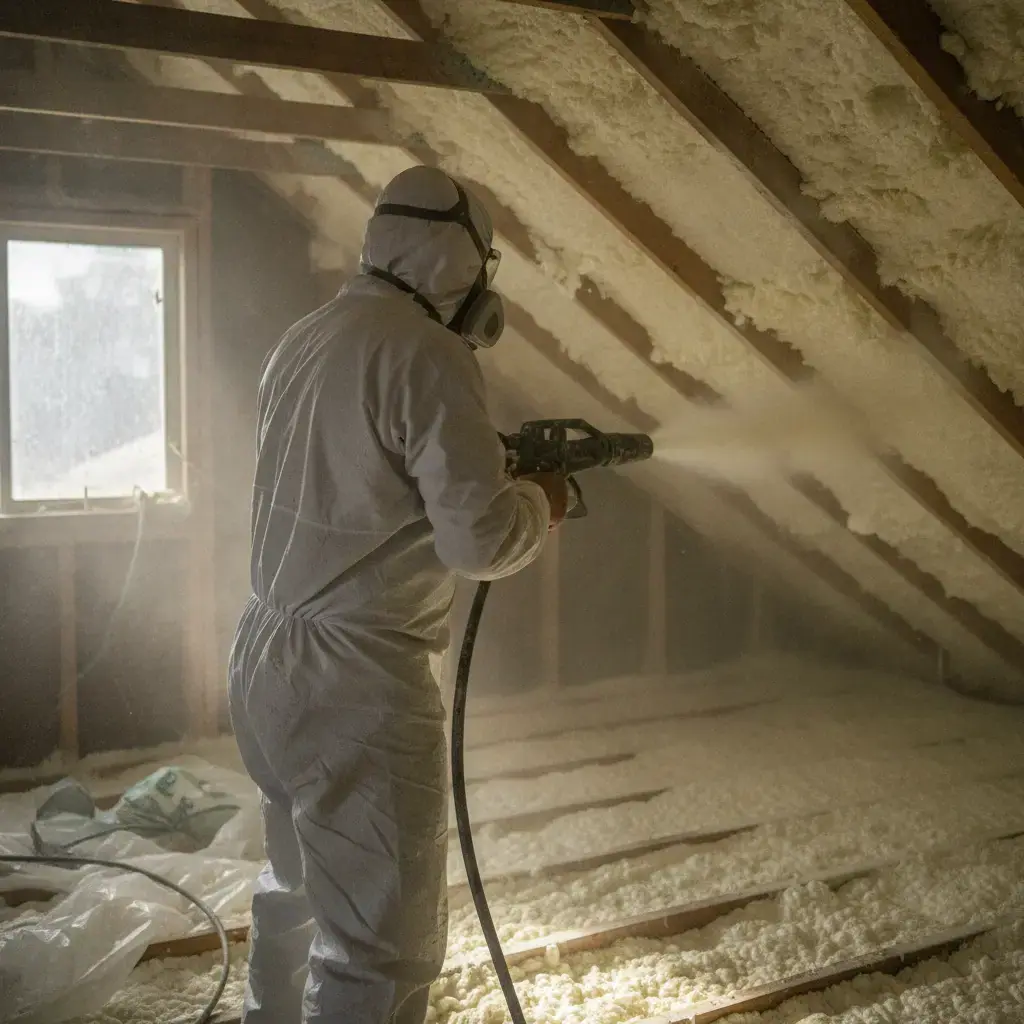
Floor Insulation in San Diego, CA
Energy-Saving Floor Insulation for San Diego, CA Homes — Licensed & Insured
Need floor insulation in San Diego, CA? Clean Air Attic Insulation offers expert installation, removal & spray foam for crawl spaces. Call (858) 360-6973 today.
Floor insulation is the process of installing thermal and acoustic barrier materials beneath your home’s living surfaces — including subfloors, crawl spaces, and over unconditioned garages — to regulate indoor temperature, reduce energy loss, and prevent moisture intrusion. In San Diego, CA, where marine layer humidity, coastal salt air, and significant temperature swings between inland valleys and the coast create unique performance demands, proper floor insulation is not a luxury but a necessity.
At Clean Air Attic Insulation, we specialize in delivering floor insulation solutions tailored to the specific construction styles, climate zones, and building challenges found across the greater San Diego region. From post-war bungalows in Lemon Grove to modern builds in Otay Mesa, our technicians understand how San Diego’s geography directly affects your home’s insulation needs. Whether you’re experiencing cold tile floors in winter, elevated energy bills, or persistent crawl space dampness, our team is equipped to diagnose and resolve the problem with lasting results.
Call us today at (858) 360-6973 to schedule your free floor insulation assessment.
Understanding Floor Insulation
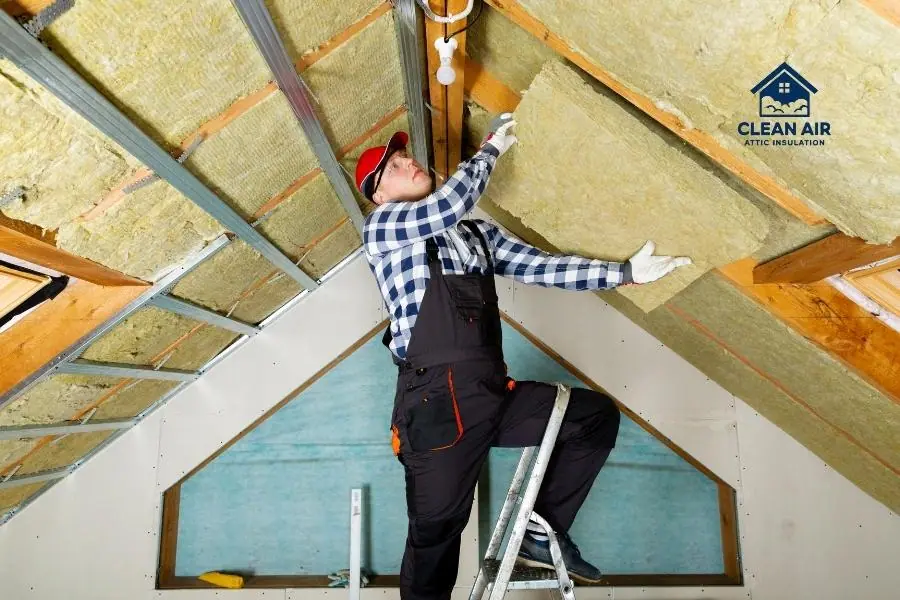
Floor insulation refers to any insulating material installed between the bottom of your home’s living space and an unconditioned area below — whether that’s an open crawl space, a vented basement, or a garage. The goal is to create a thermal boundary that keeps heat inside during cooler months and blocks heat gain during warmer periods, all while managing moisture vapor that can silently damage structural framing.
The concept of sub-floor insulation gained widespread adoption in California following the energy crises of the 1970s. Prior to updated Title 24 energy code requirements, the majority of San Diego homes built before 1978 were constructed with little to no floor insulation. This is particularly relevant in San Diego, where roughly 60% of the residential housing stock was built before modern energy codes took effect. Many of these homes — craftsman cottages in North Park, Spanish Revival structures in Coronado, and mid-century ranches throughout La Mesa — still operate with original, uninsulated subfloors today.
Read moreShow less
Floor insulation materials have evolved significantly. Early installations relied on fiberglass batt insulation mechanically held between floor joists. Today, homeowners can choose from blown-in insulation, rigid foam boards, and spray polyurethane foam, each offering specific performance benefits depending on joist depth, moisture exposure, and accessibility.
In San Diego specifically, the combination of raised-foundation homes (common throughout Chula Vista, National City, and Spring Valley) and pier-and-beam construction in older neighborhoods creates widespread opportunity — and need — for floor insulation upgrades. The region’s mild but moisture-influenced climate means that without a proper thermal and vapor barrier at the floor level, homes lose conditioned air continuously while risking wood rot, mold proliferation, and pest intrusion in the crawl space below.
Understanding what type of floor system your home has is the critical first step. Clean Air Attic Insulation conducts a thorough structural assessment before recommending any insulation approach, ensuring the right product is matched to your home’s actual construction and your neighborhood’s microclimate.
Why Floor Insulation Is Needed in San Diego, CA
Marine Layer Humidity and Coastal Moisture
San Diego’s famous June Gloom — a marine layer phenomenon that blankets coastal neighborhoods like Imperial Beach, Coronado, and Nestor from May through July — brings sustained periods of high humidity, often reaching 85–95% relative humidity in the early morning hours. When this moist air migrates beneath elevated homes through open crawl space vents, it condenses on cooler wood framing and subfloor surfaces. Over time, chronic moisture exposure at levels above 19% wood moisture content leads to structural wood rot, mold colonization, and deterioration of any existing insulation. Without a sealed floor insulation system or crawl space encapsulation, coastal San Diego homes are particularly vulnerable.
Soil Conditions in the San Diego Region
San Diego County sits atop diverse soil profiles, including expansive clay soils in the South Bay, decomposed granite in the inland foothills, and sandy loam along coastal plains. Clay-rich soils found throughout Bonita, Spring Valley, and La Presa retain moisture at the surface level and release humidity vapor upward through crawl space vents for months after rainfall events. The heavy rains of the 2023–2024 La Niña weather pattern — which delivered over 11 inches of rain to San Diego in just 60 days between January and March 2024 — left crawl spaces in these neighborhoods saturated and their floor insulation systems compromised or destroyed.
Temperature Differential Between Zones
San Diego’s microclimates create significant temperature differentials within just a few miles. Coastal neighborhoods like Coronado and Imperial Beach average winter lows around 48°F, while inland communities like La Mesa and Spring Valley regularly drop to 38–42°F on winter nights. In Otay Mesa and San Ysidro, proximity to the US-Mexico border canyon terrain creates cold air pooling effects that can push crawl space temperatures even lower overnight. This temperature differential between your living area and the unconditioned space below your floor results in measurable heat loss — up to 15–20% of a home’s total heating energy — when floor insulation is absent or degraded.
Aging Housing Stock
A significant portion of San Diego’s residential inventory was constructed between 1945 and 1975, during a post-war building boom that prioritized speed over energy efficiency. Neighborhoods like Lemon Grove, National City, and Palm City contain dense concentrations of homes built on raised foundations with minimal or no original insulation. Many of these properties have never received an insulation update, meaning the floor assembly has been unprotected for 50 to 70 years — far exceeding the useful lifespan of any insulation product.
Utility Costs and Title 24 Compliance
SDG&E residential electricity rates in San Diego have climbed steadily, with average rates now exceeding $0.39 per kWh — among the highest in the continental United States. Homes without adequate floor insulation contribute directly to elevated utility consumption, especially in homes that rely on in-slab radiant systems or forced-air HVAC units working to overcome heat loss through uninsulated floors.
Free, no-obligation estimates
Talk to Clean Air Attic Insulation
Tell us what you need and we’ll take it from there.
Signs You Need Floor Insulation in San Diego
Thermal Comfort Issues
- Floors feel noticeably cold to the touch during San Diego winter months, particularly mornings between December and February
- Uneven temperatures from room to room, especially in rooms over a crawl space versus rooms over a slab
- HVAC system running longer cycles than expected without achieving the set thermostat temperature
Moisture and Air Quality Concerns
- Musty or earthy odors rising from floor level, especially after coastal fog events or rainfall
- Visible condensation on floor surfaces, tile grout darkening, or warping of hardwood flooring
- Allergy or respiratory symptoms that worsen at home, suggesting mold spores from beneath the floor
Structural and Visual Symptoms
- Existing batt insulation visibly hanging, sagging, or falling from between floor joists when viewed from the crawl space
- Insulation that appears darkened, stained, or compressed — indicating moisture absorption and loss of R-value
- Pest activity (rodents, termites) nesting within degraded crawl space insulation
Energy Bill Indicators
- Monthly SDG&E bills significantly higher than comparable homes in your San Diego neighborhood
- A noticeable spike in utility costs after a wet season without explanation
If you recognize two or more of these symptoms, contact Clean Air Attic Insulation at (858) 360-6973 for an immediate assessment.
Our process
Our Floor Insulation Process in San Diego
Clean Air Attic Insulation follows a structured, San Diego–adapted installation process designed to maximize performance, safety, and longevity for your specific home type and neighborhood conditions.
- 01
Free On-Site Assessment (Day 1 — 60 to 90 Minutes)
Our technician performs a complete evaluation of your crawl space or sub-floor area, measuring joist depth, documenting existing insulation condition, assessing moisture content with calibrated meters, and photographing any structural concerns. We also review
- 02
Moisture and Air Sealing Preparation (Day 1–2)
Before any insulation is installed, we address air leakage points and existing moisture intrusion. This includes sealing penetrations around plumbing, HVAC ducts, and electrical conduits passing through the floor assembly. In homes with elevated crawl space hu
- 03
Removal of Degraded Existing Insulation (Day 2 — If Required)
If existing insulation is moisture-damaged, pest-infested, or has fallen below effective R-value thresholds, our team performs a full insulation removal using HEPA-equipped vacuum systems and protective containment protocols. All debris is bagged, removed, and
- 04
Installation of New Floor Insulation (Day 2–3)
Based on assessment findings, we install the appropriate insulation system — whether blown-in, spray foam, or batt — ensuring full coverage between joists with no gaps, voids, or compressions. R-value targets are calibrated to California’s Title 24 requirement
- 05
Quality Inspection and Documentation (Day 3)
Post-installation, we conduct a secondary crawl space inspection, photograph completed work, and provide a written summary of installed R-values, materials used, and any recommendations for supplemental moisture management. The entire project typically complet
Floor Insulation Methods and Approaches We Use
Fiberglass Batt Insulation
Traditional fiberglass batts, sized to fit between standard 16-inch or 24-inch on-center floor joists, remain a cost-effective option for accessible crawl spaces with low moisture levels. Best suited for inland San Diego communities like La Mesa and Spring Valley where crawl space humidity is moderate. We install batts with the vapor retarder facing the conditioned space and mechanically secure them with insulation support rods to prevent future sagging — a chronic failure point in older San Diego homes.
Blown-In Insulation
Blow-in insulation using cellulose or fiberglass fills irregular joist bays and is ideal for retrofit applications in older homes where joist spacing is non-standard. Particularly effective in craftsman and bungalow-style homes throughout Lemon Grove and National City where original framing may be inconsistent.
Spray Foam Insulation
Spray foam insulation — both open-cell and closed-cell formulations — provides the highest R-value per inch and creates an air and vapor barrier simultaneously. Closed-cell spray foam is the preferred solution for crawl spaces in coastal areas like Imperial Beach and Coronado where moisture exposure is highest, delivering up to R-6.5 per inch while sealing against vapor intrusion.
Rigid Foam Board
Rigid polyisocyanurate or XPS foam boards are used in applications where spray foam installation is impractical, such as over garage ceilings or in areas with limited clearance. These boards are mechanically fastened and provide consistent, measurable R-values suitable for California Title 24 documentation.
Hybrid Systems
Some San Diego homes benefit from a hybrid approach — a closed-cell spray foam flash coat for vapor control combined with blown-in insulation for bulk thermal resistance. This system is particularly effective in transitional climate zones like Bonita and Otay Mesa West.
Floor Insulation Cost in San Diego, CA
Understanding floor insulation cost in San Diego, CA helps homeowners budget appropriately and evaluate proposals with confidence. Pricing varies based on material type, crawl space accessibility, existing conditions, and square footage.
Typical Price Ranges
- Fiberglass Batt Insulation: $1.50–$2.50 per square foot installed, or approximately $2,500–$4,500 for an average 1,500 sq ft San Diego home footprint
- Blown-In Insulation: $2.00–$3.50 per square foot installed, ranging from $3,000–$5,500 for a typical San Diego property
- Spray Foam (Closed-Cell): $4.00–$7.00 per square foot installed, making full floor coverage $6,000–$10,500 — justified by superior moisture resistance in coastal areas
- Insulation Removal (If Required): $1.00–$2.00 per square foot, typically $1,500–$3,000 for a full crawl space removal
Read moreShow less
Factors That Affect Pricing in San Diego
- Crawl space clearance: Homes in older National City and Lemon Grove neighborhoods may have crawl spaces with less than 18 inches of clearance, increasing labor time and cost by 20–35%
- Moisture remediation needs: Properties near Nestor, Imperial Beach, or other coastal zones may require vapor barrier installation or encapsulation prior to insulation, adding $1,500–$4,000
- Existing insulation condition: Removal of pest-contaminated or mold-affected insulation requires specialized equipment and disposal, adding to total project cost
- SDG&E rebates: Qualifying insulation upgrades may be eligible for SDG&E energy efficiency rebates, reducing net cost by $200–$800 depending on R-value achieved
Contact us at (858) 360-6973 for a no-obligation quote specific to your San Diego home.

San Diego Neighborhoods We Serve
Chula Vista and Bonita
These South Bay communities feature a mix of 1960s–1980s tract homes on raised foundations and newer construction on slab. Older raised-foundation properties in Chula Vista are prime candidates for blown-in and spray foam floor insulation, particularly given the clay soil moisture conditions prevalent in the Sweetwater Valley.
National City and Lemon Grove
Dense with post-war housing stock from the 1940s–1960s, these communities have some of the highest concentrations of uninsulated crawl spaces in San Diego County. Many homes feature shallow crawl spaces under 24 inches requiring specialized installation techniques.
Imperial Beach and Coronado
Proximity to the Pacific Ocean and San Diego Bay makes these neighborhoods the most moisture-exposed in our service area. Closed-cell spray foam and full crawl space encapsulation are strongly recommended for elevated homes in these communities to combat salt air and chronic humidity.
La Mesa and Spring Valley
Inland elevation and cooler winter nights make floor insulation particularly impactful for thermal comfort in these hillside communities. Many 1970s-era ranchers in La Mesa have original fiberglass batts that have long exceeded their functional lifespan and require replacement.
We also serve San Ysidro, Otay Mesa, Egger Highlands, Otay Mesa West, Nestor, La Presa, and Palm City.
Floor Insulation Maintenance Tips for San Diego Homeowners
Proper maintenance extends the life of your floor insulation and protects your investment, especially given San Diego’s unique climate conditions.
- Inspect crawl space annually after rainy season: Following San Diego’s winter rain events (typically January–March), check crawl space humidity with a moisture meter. Target readings below 60% relative humidity.
- Check for displaced or sagging insulation: Inspect batt insulation twice yearly — sagging indicates moisture absorption or pest activity requiring immediate attention.
- Monitor crawl space vents: Ensure foundation vents are clear of debris and functioning properly. In coastal areas like Nestor and Imperial Beach, consider upgrading to smart vents that close during high-humidity coastal fog events.
- Control crawl space moisture proactively: Consider a crawl space vapor barrier if your home sits in a low-lying area or near the Bay.
- Seal plumbing penetrations: Pipe penetrations through the subfloor are common thermal bypass points — reseal with foam annually.
- Watch for pest activity: Rodents nesting in insulation is common throughout San Diego’s canyon-adjacent neighborhoods. Contact a pest professional immediately if signs appear.
- Review energy bills seasonally: A sudden increase in SDG&E bills during December–February can signal insulation degradation requiring inspection.
Why Choose Clean Air Attic Insulation for Floor Insulation in San Diego
Clean Air Attic Insulation is a locally operating insulation company serving the greater San Diego region with specialized expertise in the floor insulation, crawl space, and attic systems that San Diego homes actually require. We are not a national franchise applying generic solutions — our technicians work daily in the specific neighborhoods, soil conditions, and building types that define this region.
Our comprehensive service menu covers every stage of the insulation lifecycle: insulation installation, spray foam insulation, attic insulation, blow-in insulation, crawl space encapsulation, crawl space insulation, insulation removal, and insulation replacement. This means one trusted contractor handles your project from assessment through completion — no subcontracting, no handoffs.
Read moreShow less
We understand SDG&E rebate programs, California Title 24 requirements, and the specific moisture dynamics of San Diego’s coastal and inland microclimates. Every project includes a detailed written report and transparent pricing before any work begins.
Call (858) 360-6973 to speak with a San Diego floor insulation specialist today.

FAQ
Frequently Asked Questions About Floor Insulation in San Diego, CA
How much does floor insulation cost in San Diego, CA?
Floor insulation in San Diego typically costs between $1.50 and $7.00 per square foot installed, depending on material type and crawl space conditions. For an average 1,500 sq ft home footprint, total project costs range from approximately $2,500 for fiberglass batts to $10,500 or more for closed-cell spray foam. Coastal homes in areas like Coronado and Imperial Beach often require premium moisture-resistant solutions at the higher end of the range.
How long does floor insulation installation take in San Diego?
Most floor insulation projects in San Diego are completed within 1 to 3 days. Simple batt or blown-in installations in accessible crawl spaces may complete in a single day. Projects requiring prior insulation removal, vapor barrier installation, or crawl space encapsulation will extend the timeline to 2–3 days. We provide a firm timeline estimate at the time of your free assessment.
Do I need to remove old insulation before installing new floor insulation?
Not always. If existing insulation is structurally intact, dry, and achieving adequate R-values, we can sometimes add supplemental insulation on top. However, in the majority of older San Diego homes we assess — particularly those built before 1980 in Lemon Grove, National City, and Chula Vista — the original insulation is moisture-damaged, pest-infested, or has lost R-value through compression and requires full removal before replacement.
What R-value do I need for floor insulation in San Diego?
California’s Title 24 energy code specifies R-19 as the minimum for floor assemblies over unconditioned spaces in San Diego’s Climate Zone 7 (coastal) and R-19 to R-30 in Climate Zone 10 (inland areas like El Cajon and Spring Valley). We recommend targeting R-25 to R-30 for optimal year-round performance given San Diego’s marine layer humidity and seasonal temperature swings.
Is floor insulation worth it for San Diego’s mild climate?
Absolutely. Despite San Diego’s mild reputation, SDG&E electricity rates above $0.39 per kWh make energy efficiency investments highly cost-effective. Homeowners who upgrade from no floor insulation to R-25 spray foam typically see 12–20% reductions in heating and cooling costs, with payback periods of 5–9 years. Coastal homes also benefit significantly from reduced mold risk and improved indoor air quality.
Can floor insulation help with moisture problems in my San Diego crawl space?
Floor insulation alone addresses thermal performance, but when paired with crawl space encapsulation or a ground-level vapor barrier, it becomes a complete moisture management system. In coastal San Diego communities exposed to marine layer humidity, we strongly recommend a combined approach for comprehensive protection.
What is the best type of floor insulation for homes near the San Diego coast?
Closed-cell spray foam is the gold standard for coastal San Diego properties in neighborhoods like Coronado, Imperial Beach, and Nestor. It provides the highest R-value per inch (up to R-6.5), creates a true vapor barrier, and resists moisture absorption — all critical qualities in areas where crawl space relative humidity regularly exceeds 80% during June Gloom season.
Does Clean Air Attic Insulation serve my neighborhood in San Diego?
Yes. We serve all communities throughout greater San Diego including San Ysidro, Palm City, Otay Mesa, Egger Highlands, Otay Mesa West, Nestor, Bonita, Chula Vista, Coronado, Imperial Beach, La Mesa, La Presa, Lemon Grove, National City, and Spring Valley. Call (858) 360-6973 to confirm service availability at your specific address.
Get a Free Floor Insulation Quote in San Diego Today
Don’t let an uninsulated or degraded floor system drain your energy dollars and expose your home to moisture damage. Whether you’re in a 1950s bungalow in Lemon Grove, a coastal home in Coronado, or a South Bay property in Chula Vista, Clean Air Attic Insulation has the expertise and materials to protect your home from the ground up.
Our San Diego floor insulation specialists are ready to provide a thorough assessment and a transparent, no-obligation quote — typically within 24 hours of your call.
- Call us: (858) 360-6973
- Service Area: San Diego, Chula Vista, La Mesa, Coronado, Imperial Beach, National City, Lemon Grove, Spring Valley, Bonita, and surrounding communities
Contact Clean Air Attic Insulation now and take the first step toward a more comfortable, energy-efficient San Diego home.
Get in touch
Find insulation help near you
Request a free estimate online or give us a call — our team will follow up quickly.
- Call us(858) 360-6973
- Visit10140 Marconi Dr, San Diego, CA 92154
- HoursMon-Sun 07:00-19:00