
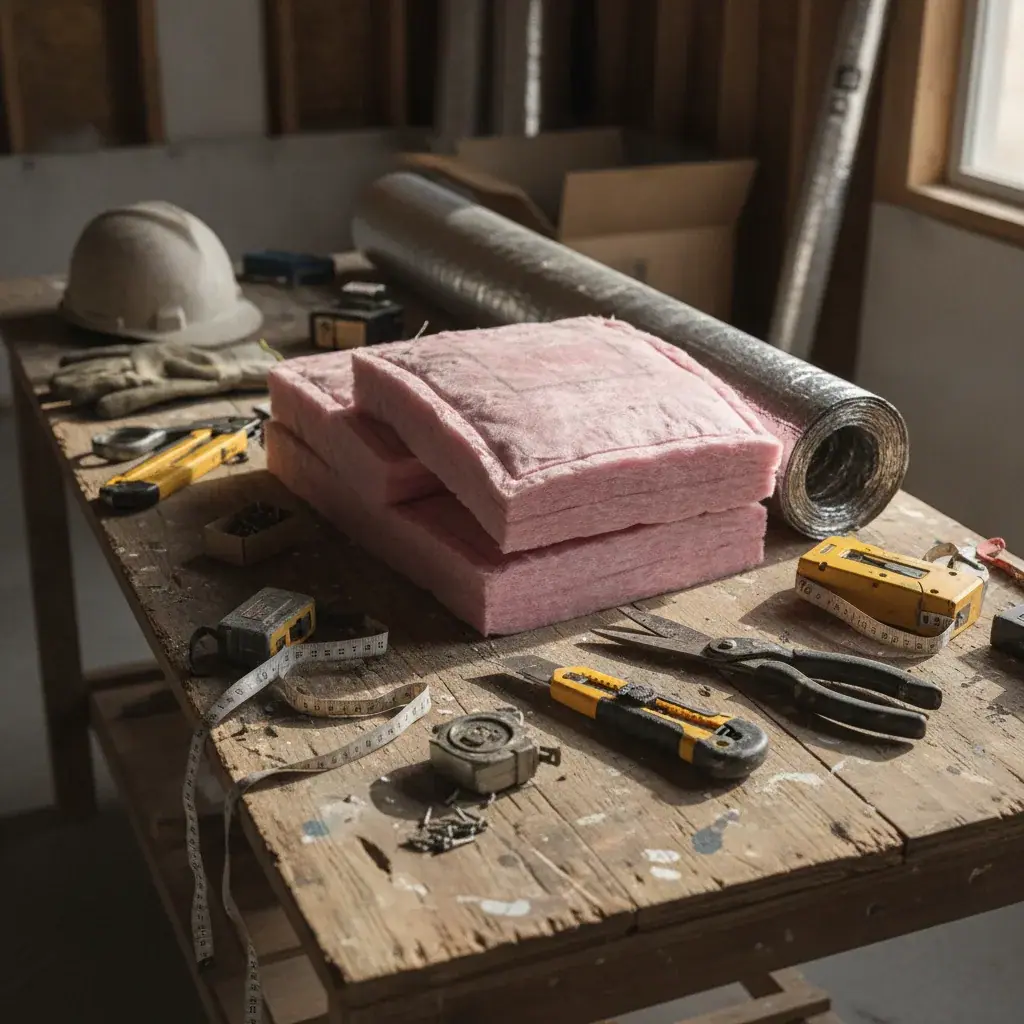
Spray Foam Insulation Cost in San Diego, CA
Transparent Spray Foam Insulation Cost Pricing for San Diego, CA Homeowners — Free Estimates
Discover spray foam insulation costs in San Diego, CA. Clean Air Attic Insulation provides expert open & closed-cell foam services for coastal & inland homes. Call (858) 360-6973.
Spray foam insulation is one of the most effective and durable insulation solutions available today, creating an airtight seal that dramatically reduces energy loss, controls moisture intrusion, and improves indoor air quality. Unlike traditional batt or blow-in insulation, spray polyurethane foam expands on contact to fill gaps, cracks, and cavities that other materials simply cannot reach.
In San Diego, CA, the unique combination of coastal humidity, marine layer conditions, and dramatic temperature swings between neighborhoods like La Jolla and East County make choosing the right insulation — and understanding its true cost — critically important for homeowners and property managers alike.
Read moreShow less
At Clean Air Attic Insulation, we specialize in helping San Diego residents navigate spray foam insulation options, pricing, and installation with expert guidance tailored to this region’s specific building stock and climate demands. Whether you’re in a 1950s bungalow in Lemon Grove or a modern build in Otay Mesa, we deliver precise, professional results. Call us today at (858) 360-6973 for a free assessment.
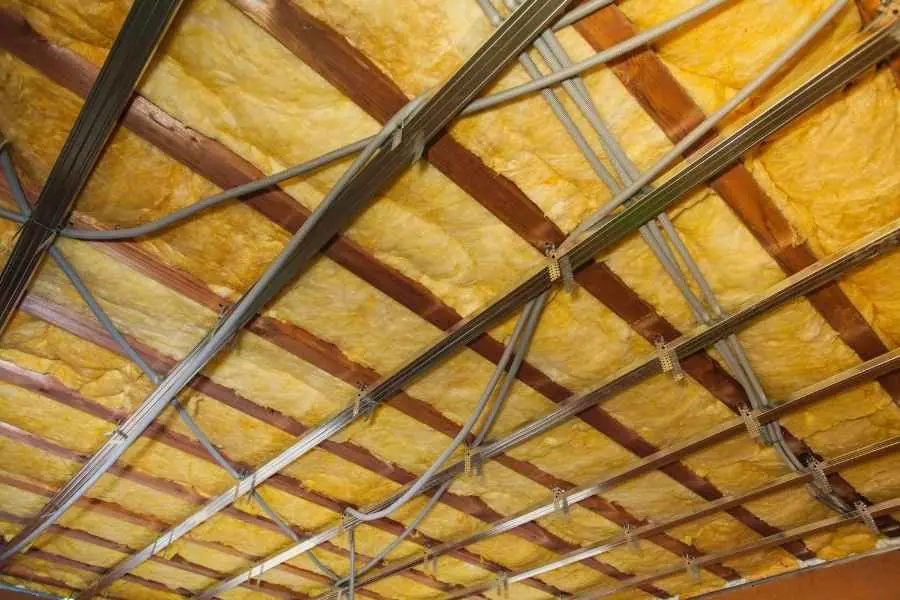
Understanding Spray Foam Insulation Cost in San Diego
Spray foam insulation is a two-component chemical mixture — typically isocyanate and polyol resin — that reacts upon application to expand into a rigid or semi-flexible foam. This expansion allows it to seal even the most irregular surfaces, making it a premium choice for insulating attics, crawl spaces, walls, and rim joists. There are two primary types: open-cell spray foam, which remains soft and flexible, and closed-cell spray foam, which cures into a rigid, moisture-resistant barrier.
Historically, spray polyurethane foam was developed in the 1940s and gained widespread residential use during the energy crisis of the 1970s when homeowners and builders began prioritizing thermal efficiency. Since then, advancements in formulation have made modern spray foam far more effective and environmentally responsible than early versions.
Read moreShow less
In San Diego County, the diverse housing stock creates a particularly wide range of spray foam applications. Coastal communities like Coronado and Imperial Beach feature older wood-frame homes — many built between the 1920s and 1960s — with minimal original insulation and significant air leakage pathways. Inland neighborhoods such as Spring Valley and Bonita tend to feature mid-century ranch homes and split-levels where attic insulation upgrades yield the greatest energy savings. Newer construction in Otay Mesa and Chula Vista increasingly incorporates spray foam as a standard spec due to California’s Title 24 energy compliance requirements.
Understanding cost means understanding scope. Spray foam insulation pricing in San Diego is influenced by the type of foam selected, the square footage being treated, the accessibility of the space, and local labor market conditions. Open-cell foam typically costs less per board foot than closed-cell, but closed-cell provides superior moisture resistance — a meaningful distinction in San Diego’s coastal zones where relative humidity regularly exceeds 80% during summer marine layer season, typically May through September.
San Diego’s mild climate (average annual temperature of 63°F) might suggest insulation is a lower priority than in extreme climates, but the truth is that managing heat gain through rooftops, controlling humidity from ocean air, and maintaining consistent indoor temperatures throughout the region’s microclimates makes quality insulation just as essential here as anywhere in the country. Learn more about attic insulation options in San Diego
Why Spray Foam Insulation Is Needed in San Diego, CA
The Marine Layer Effect
San Diego’s famous “June Gloom” and coastal marine layer are not merely aesthetic phenomena. From approximately May through September, dense marine fog and mist regularly push inland from the Pacific Ocean, increasing relative humidity levels in coastal neighborhoods like Imperial Beach, Coronado, and National City to between 85% and 95% by early morning hours. Traditional fiberglass batt insulation absorbs this ambient moisture, reducing its thermal resistance (R-value) by as much as 40% when wet. Spray foam, by contrast, does not absorb moisture — closed-cell spray foam acts as a Class II vapor retarder, actively resisting moisture migration into wall cavities and attic spaces.
San Diego’s Dramatic Microclimate Temperature Swings
San Diego County is home to some of the most dramatic microclimate temperature variations in the continental United States. On a single summer afternoon, coastal neighborhoods such as Coronado may sit at a comfortable 72°F while inland communities like Spring Valley and La Mesa reach 95°F or higher. This 20°F-plus differential means that homes without properly air-sealed insulation are essentially pumping expensive conditioned air into unconditioned attic and crawl space cavities throughout peak demand periods.
The region’s Santa Ana wind events — which occur primarily from October through April — compound this challenge. During Santa Ana conditions, temperatures can spike 15–20°F above seasonal averages within hours, particularly impacting neighborhoods east of Interstate 805 including La Presa and the eastern portions of Chula Vista. Poorly insulated attics in these areas can reach temperatures exceeding 150°F under these conditions, forcing HVAC systems to work significantly harder and increasing utility bills by an estimated 25–35% during these periods.
Aging Housing Stock and Code Changes
Approximately 47% of San Diego County’s housing units were constructed before 1980, according to U.S. Census data — before modern energy codes mandated minimum R-values for attic and wall insulation. Many homes in neighborhoods like Lemon Grove, La Mesa, and older sections of Chula Vista were originally built with R-11 fiberglass batts or no insulation at all in crawl spaces. California’s current Title 24 energy standards require attic insulation of at least R-38 in most San Diego climate zones (Climate Zones 7 and 10), meaning a significant percentage of existing homes fall dramatically short of current standards.
Seismic Activity and Structural Gaps
San Diego sits near several active fault systems, including the Rose Canyon Fault running directly through the city. Minor seismic events — San Diego experiences dozens of earthquakes annually in the 2.0–3.5 magnitude range — can gradually widen gaps around penetrations, loosen rim joists, and create new air infiltration pathways that accelerate insulation degradation. Spray foam’s adhesive properties allow it to bond directly to structural framing, maintaining its seal even through minor ground movement that would shift or compress traditional batt insulation. Explore crawl space insulation solutions for San Diego homes
Free, no-obligation estimates
Talk to Clean Air Attic Insulation
Tell us what you need and we’ll take it from there.
Signs You Need Spray Foam Insulation in San Diego
Energy and Comfort Indicators
- Monthly SDG&E electricity bills that have increased more than 15% year-over-year without a corresponding change in usage habits
- Noticeable temperature differences of 5°F or more between rooms on the same floor during summer months
- HVAC system running continuously during San Diego’s mild spring and fall seasons when minimal conditioning should be needed
- Warm or hot ceilings during summer months, particularly in rooms directly below the attic
Moisture and Air Quality Indicators
- Musty or damp odors in rooms adjacent to crawl spaces, particularly in coastal areas like National City or Imperial Beach after prolonged marine layer periods
- Visible condensation on interior window surfaces during winter mornings
- Increased dust accumulation throughout the home — a sign of excessive air infiltration from unconditioned spaces
- Allergy symptoms or respiratory irritation that worsen at home, suggesting poor indoor air quality due to unfiltered air infiltration
Physical and Structural Indicators
- Visible daylight through gaps around electrical outlets, plumbing penetrations, or where walls meet the attic floor
- Existing fiberglass or cellulose insulation that appears compressed, discolored, or matted — signs of age and moisture damage
- Insulation that is more than 15–20 years old and has never been inspected or upgraded
Urgency Note: Homes in San Diego’s coastal zones within one mile of the Pacific Ocean — including Coronado, Imperial Beach, and Nestor — should treat moisture-related insulation symptoms as urgent, as prolonged humidity exposure accelerates both structural wood damage and mold proliferation. Learn about professional insulation removal and replacement services
Spray Foam Methods and Approaches We Use in San Diego
Open-Cell Spray Foam (0.5 lb Density)
Open-cell spray foam is softer, more flexible, and less expensive per board foot than closed-cell. It achieves approximately R-3.5 to R-3.7 per inch and excels at filling large irregular cavities such as attic rafters in older Craftsman and Spanish Colonial homes common throughout San Diego’s established neighborhoods like North Park and South Park. Because it is vapor-permeable, open-cell is best suited for interior applications where moisture drive from the exterior is not a primary concern — such as interior walls and interior attic roof decks in non-coastal zones like La Mesa and Lemon Grove.
Closed-Cell Spray Foam (2 lb Density)
Closed-cell spray foam achieves R-6.0 to R-7.0 per inch and functions as both a thermal barrier and a Class II vapor retarder. It is the preferred choice for San Diego coastal properties, crawl space encapsulation, and any application where moisture intrusion is a documented concern. Homes in Imperial Beach, Coronado, and Nestor that sit within the marine influence zone benefit most from closed-cell applications. It also adds measurable structural rigidity to wall and roof assemblies.
Flash and Batt (Hybrid Application)
A popular cost-managing approach involves applying a thin (1–2 inch) layer of closed-cell spray foam directly to the roof deck or exterior wall sheathing for air sealing and moisture control, followed by conventional batt or blow-in insulation to achieve target R-values. This hybrid method is widely used in San Diego remodels where budget is a consideration but moisture management cannot be compromised.
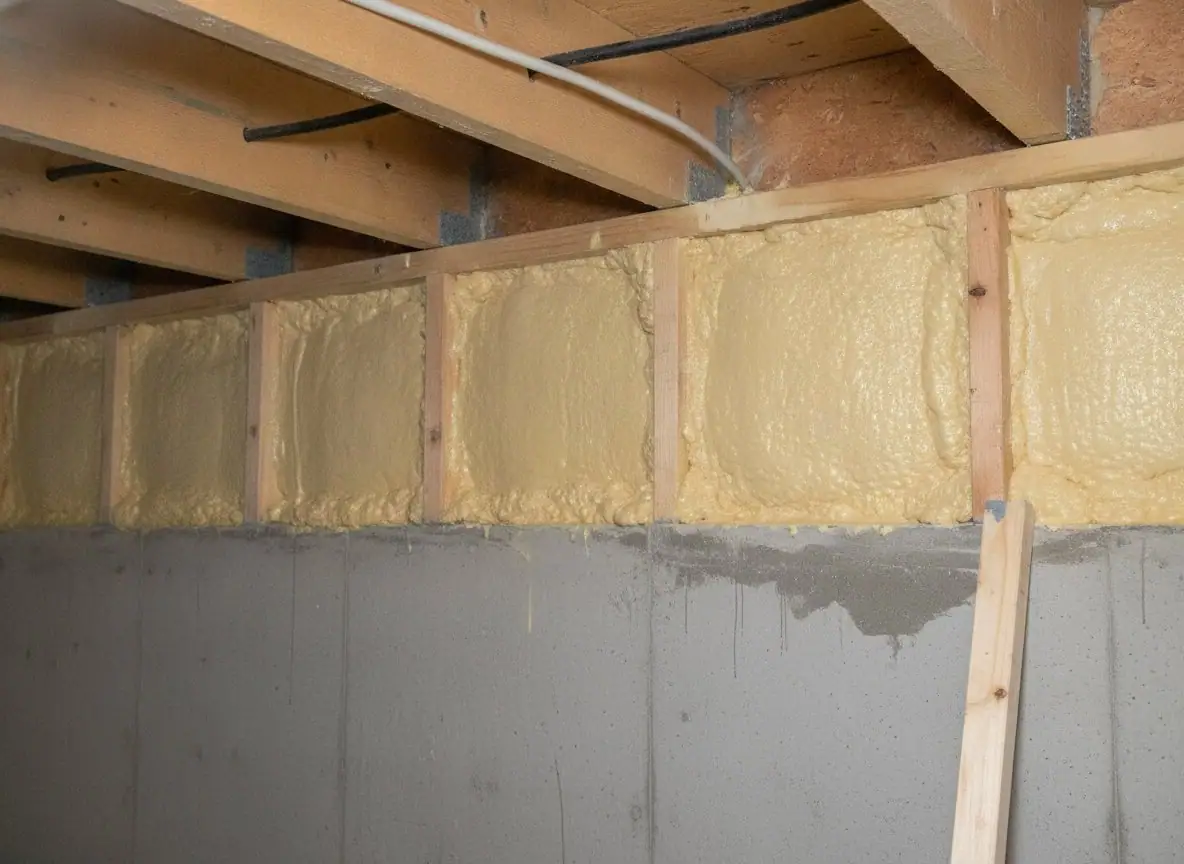
Crawl Space Encapsulation with Closed-Cell Foam
Crawl spaces throughout San Diego’s older neighborhoods — particularly in Bonita, Spring Valley, and La Presa — are frequently vented to the exterior, allowing humid ocean air to infiltrate and create conditions for mold, wood rot, and pest activity. Learn about our crawl space encapsulation services We apply closed-cell foam to foundation walls and band joists, creating an unvented, conditioned crawl space that dramatically reduces moisture infiltration.
Spray Foam Insulation Cost in San Diego, CA — What to Expect
Understanding spray foam insulation costs in San Diego requires looking beyond simple per-square-foot figures, as multiple variables significantly influence final project pricing.
Typical Price Ranges in San Diego
- Open-cell spray foam: $1.00–$1.50 per board foot (one square foot, one inch thick) installed
- Closed-cell spray foam: $1.75–$3.00 per board foot installed
- Average attic insulation project (1,200–1,500 sq ft attic): $2,500–$7,500 depending on foam type and depth
- Average crawl space encapsulation (800–1,200 sq ft): $3,000–$8,000 for closed-cell application
- Flash and batt hybrid (per 1,000 sq ft): $1,500–$3,500
Key Cost Factors in San Diego
Coastal location premium: Homes within two miles of the San Diego coastline — including Coronado, Imperial Beach, and Nestor — typically see 10–15% higher material costs due to the specification for closed-cell foam to address elevated humidity levels.
Read moreShow less
Existing insulation removal: If degraded fiberglass or vermiculite insulation must be removed before spray foam installation, add $1.00–$2.00 per square foot to the total. Learn about our insulation removal services
Access difficulty: Attics with limited clearance (under 30 inches) or crawl spaces with standing moisture require additional labor time.
SDG&E Rebates: San Diego Gas & Electric offers rebates through the Energy Upgrade California program for qualifying insulation upgrades. Eligible projects can receive rebates ranging from $200 to $1,500 depending on scope, meaningfully offsetting total project cost. Ask our team about current program availability when you call (858) 360-6973.
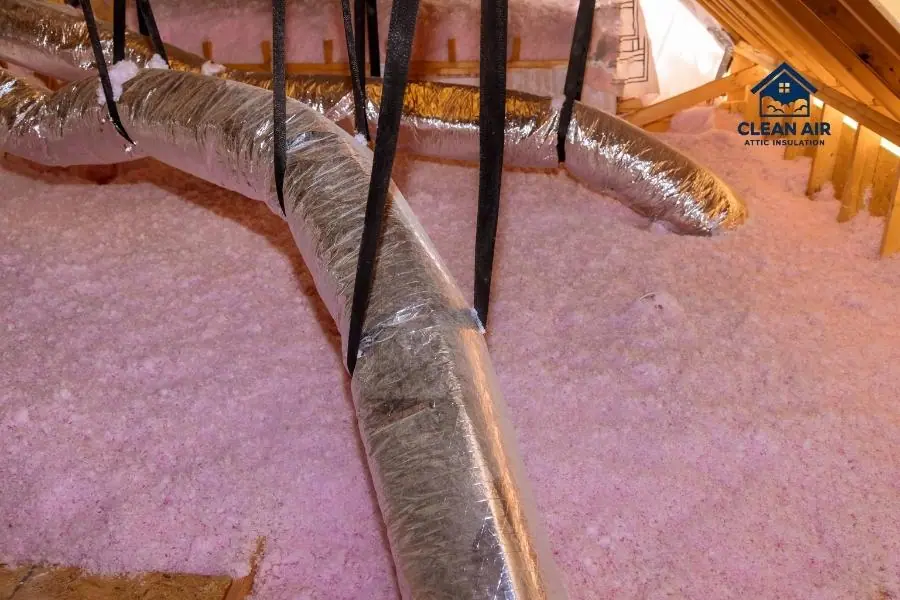
Spray Foam Insulation Service Areas in San Diego County
Chula Vista and Bonita
Chula Vista features a mix of 1960s–1980s suburban tract homes and newer master-planned communities in Eastlake and Otay Ranch. Older neighborhoods often have minimal attic insulation while newer builds require performance upgrades to meet evolving Title 24 standards. Bonita’s hillside homes frequently have complex rooflines and vented crawl spaces that benefit significantly from closed-cell foam encapsulation.
National City and Imperial Beach
These coastal communities feature dense concentrations of pre-1970 housing stock, much of it with original fiberglass batts or no crawl space insulation at all. Marine layer humidity exposure is among the highest in the county, making moisture-resistant closed-cell spray foam the clear recommendation for virtually all applications.
La Mesa and Lemon Grove
Inland East County communities experience the county’s widest summer temperature swings, with summer highs regularly exceeding 95°F. Ranch-style homes from the 1950s and 1960s with low-slope roofs and uninsulated attics see dramatic improvement in comfort and energy efficiency following spray foam attic upgrades.
Otay Mesa and San Ysidro
Border region communities feature a growing inventory of light commercial and residential buildings where spray foam delivers both energy compliance and moisture protection. We serve both residential and light commercial properties throughout this rapidly developing corridor.
Maintenance Tips for Spray Foam Insulation in San Diego
Spray foam insulation is exceptionally durable, but proactive maintenance ensures it continues performing optimally through San Diego’s coastal climate conditions.
- Annual visual inspection: Each fall before the rainy season (November–March in San Diego), visually inspect accessible attic and crawl space areas for any signs of new gaps, pest intrusion, or foam damage.
- Monitor for pest activity: San Diego’s year-round warm climate supports termite and rodent activity. Inspect spray foam surfaces for gnawing damage — rodents occasionally burrow into open-cell foam. Address infestations before they compromise your insulation system.
- Protect from UV exposure: Closed-cell spray foam exposed to direct sunlight (such as in open carports or unfinished soffits) should be covered with a paint coating or thermal barrier, as UV radiation gradually degrades exposed foam surfaces.
- Check HVAC penetrations annually: San Diego’s HVAC systems frequently cycle during Santa Ana events. Ensure all ductwork penetrations through insulated areas remain properly sealed.
- Post-earthquake inspection: After any seismic event of 4.0 magnitude or greater felt in San Diego, inspect insulated areas for new cracks or gaps in adjacent structural members that may require resealing.
- Manage crawl space drainage: Following San Diego’s periodic heavy winter rain events — such as the atmospheric river storms that impacted the county in January 2024 — inspect crawl spaces for water intrusion and address drainage issues promptly.
- Retest R-values every 10 years: While spray foam does not settle or compress like batt insulation, professional reassessment every decade confirms ongoing performance and identifies any new infiltration pathways.
Why Choose Clean Air Attic Insulation for Spray Foam in San Diego
At Clean Air Attic Insulation, we are a locally operated insulation contractor with deep expertise in San Diego County’s unique climate, building stock, and energy code requirements. Our team understands the difference between insulating a 1940s beach cottage in Imperial Beach and a new construction home in Otay Mesa — and we bring that location-specific knowledge to every project we undertake.
We work with California Title 24 compliance in mind on every job, helping homeowners not only improve comfort and reduce energy costs but also qualify for available SDG&E rebate programs. Our transparent, itemized estimates mean you know exactly what you’re getting before any work begins — no surprise charges, no upselling.
Read moreShow less
Our crew members are trained in both open-cell and closed-cell application techniques, and we use industry-standard spray rigs calibrated for consistent, controlled output. We take San Diego’s coastal moisture conditions seriously and match our product specifications to the specific conditions your home faces.
Ready to take the next step? Call us at (858) 360-6973 to schedule your free on-site assessment. Contact Clean Air Attic Insulation today
FAQ
Frequently Asked Questions About Spray Foam Insulation Cost in San Diego
How much does spray foam insulation cost for an average San Diego home?
For a typical San Diego single-family home with a 1,200–1,500 square foot attic, spray foam insulation costs range from approximately $2,500 to $7,500 depending on foam type (open-cell vs. closed-cell), required depth to achieve Title 24 R-value minimums, and site conditions. Coastal homes in areas like Coronado or Imperial Beach typically fall at the higher end due to the preference for moisture-resistant closed-cell foam.
Is closed-cell or open-cell spray foam better for San Diego’s climate?
Both have appropriate applications in San Diego, but the choice depends heavily on your location within the county. Homes within two miles of the Pacific coastline — in communities like Nestor, Imperial Beach, National City, and Coronado — benefit most from closed-cell spray foam due to its superior moisture resistance in the face of persistent marine layer humidity. Inland homes in La Mesa, Spring Valley, and Lemon Grove can often achieve excellent results with open-cell foam in attic applications, which costs less per board foot.
How long does spray foam insulation installation take in San Diego?
Most residential spray foam projects in San Diego are completed within one day. A standard attic application typically takes 4–6 hours including preparation and cleanup. Crawl space encapsulation adds 2–4 additional hours depending on access and square footage. The foam requires a 24-hour cure period before the space is re-occupied, so most clients plan to be away from the treated area overnight.
Does spray foam insulation qualify for SDG&E rebates in San Diego?
Yes, qualifying insulation upgrades can be eligible for rebates through SDG&E’s Energy Upgrade California program. Rebate amounts vary based on project scope and current program funding availability, ranging from approximately $200 to $1,500. We assist clients in understanding available incentives during the estimate process. We recommend confirming current program terms directly with SDG&E at the time of your project.
How does San Diego’s coastal humidity affect spray foam insulation performance?
Closed-cell spray foam is essentially impervious to moisture absorption, maintaining its rated R-value even when surrounding humidity levels reach 90%+ during peak marine layer season. Open-cell foam is vapor-permeable and can absorb some moisture in extremely humid conditions, which is why we typically recommend closed-cell formulations for any application directly exposed to San Diego’s coastal humidity, including exterior wall cavities and crawl space encapsulation in coastal communities.
Will spray foam insulation help with noise reduction in San Diego?
Yes. Open-cell spray foam in particular offers meaningful sound dampening properties due to its porous cellular structure. This is a significant benefit for San Diego homes near major traffic corridors like Interstate 5, State Route 54, or the trolley lines running through National City and Chula Vista, as well as homes near Lindbergh Field flight paths in Coronado and Point Loma areas.
How long will spray foam insulation last in a San Diego home?
Properly installed spray foam insulation has an effective lifespan of 80 years or more under normal conditions. It does not settle, compress, or biodegrade like traditional fiberglass batts, making it a long-term investment rather than a recurring maintenance expense. Its performance is not degraded by San Diego’s temperature cycling, Santa Ana wind events, or typical seismic activity.
Can spray foam insulation be applied over existing insulation in my San Diego attic?
In some cases, yes — spray foam can be applied directly over existing insulation if the existing material is dry, undamaged, and not a concern for air quality (such as vermiculite containing asbestos). However, in many San Diego homes with older fiberglass batts that have been compromised by moisture or pest activity, we recommend professional removal before spray foam application to ensure adhesion and avoid trapping contaminants. Learn about our insulation removal process
Get Your Free Spray Foam Insulation Estimate in San Diego Today
If you’re ready to improve your San Diego home’s comfort, reduce your energy costs, and protect your property from the region’s unique coastal humidity and temperature challenges, Clean Air Attic Insulation is ready to help.
We serve homeowners throughout San Diego County, including Chula Vista, National City, Imperial Beach, Coronado, La Mesa, Lemon Grove, Bonita, Spring Valley, Otay Mesa, Nestor, San Ysidro, La Presa, and surrounding communities. Our free on-site assessments include a full review of your current insulation status, R-value comparisons against Title 24 requirements, and a transparent written estimate with no obligation.
Call us today at (858) 360-6973 to schedule your free assessment. Don’t let another San Diego summer or rainy season compromise your home’s comfort and efficiency — contact Clean Air Attic Insulation now. Schedule your free consultation online
Get in touch
Find insulation help near you
Request a free estimate online or give us a call — our team will follow up quickly.
- Call us(858) 360-6973
- Visit10140 Marconi Dr, San Diego, CA 92154
- HoursMon-Sun 07:00-19:00